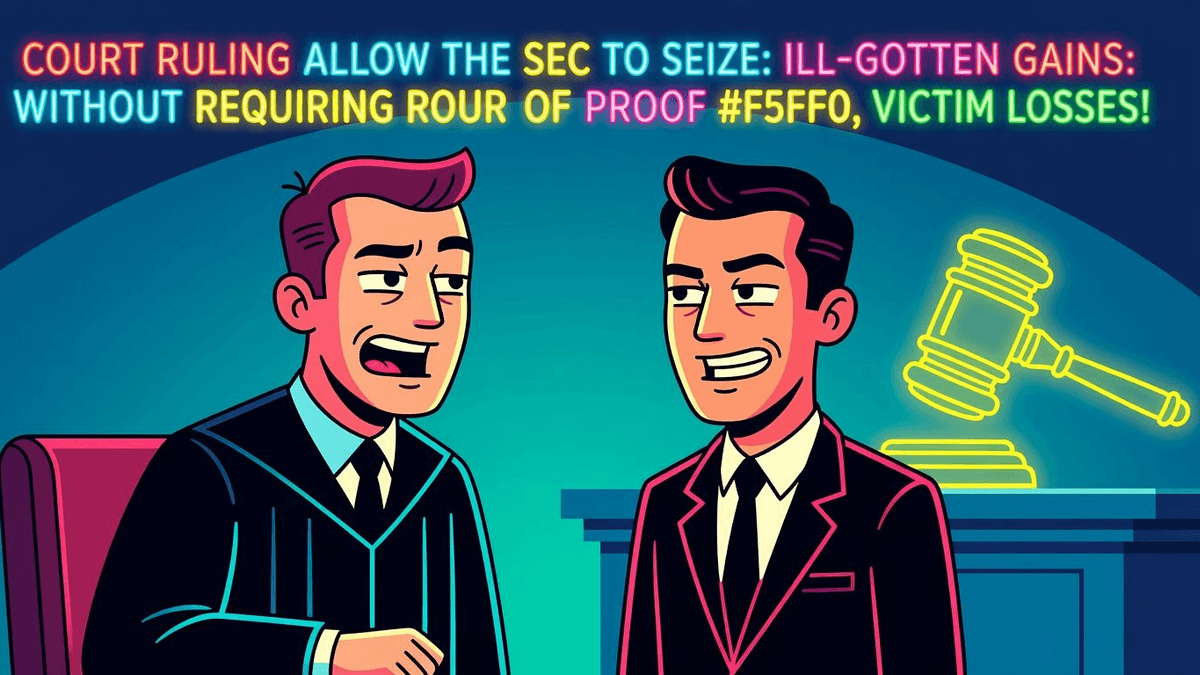
The Supreme Court just confirmed the obvious: the SEC can take back money made through deception, even when no individual victim can be paraded in front of a judge. Corporate lobbyists had argued this was somehow unfair, as if the absence of a documented loss turns fraud into a clever business strategy. In reality, the ruling closes a loophole that let firms treat regulatory fines like optional parking tickets.
Under the old logic, a company could run a pump-and-dump scheme, pocket the proceeds, and claim victory if the victims were too scattered or ashamed to sue. The justices rejected that framing without much drama, which is its own kind of indictment. PR teams will now pivot to words like "regulatory uncertainty" and "innovation chill," but the math remains simple: ill-gotten money belongs to the system it exploited, not the people who ran the scheme.